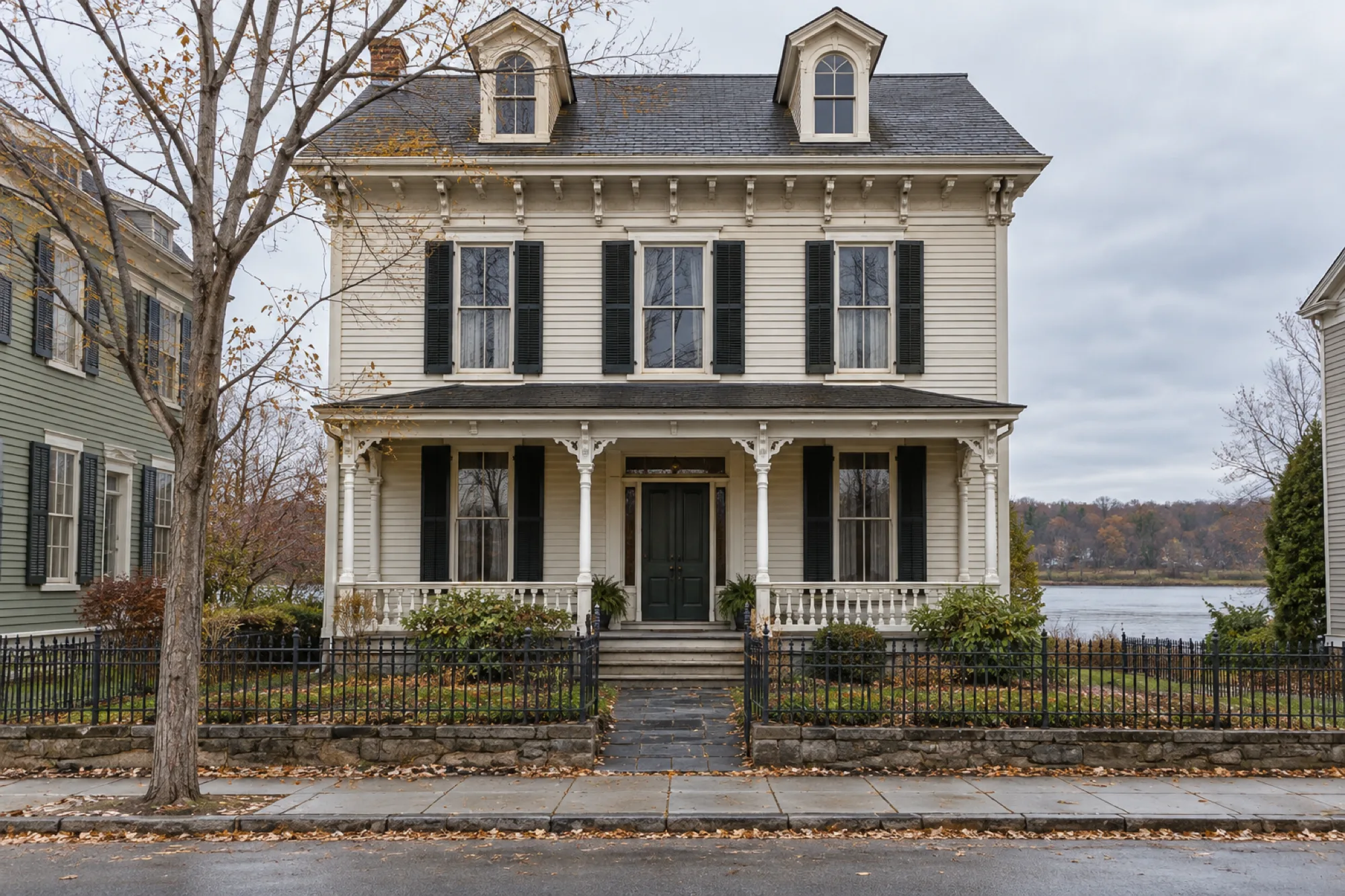
An 1884 merchant’s house on the river, and the garden behind its wall.
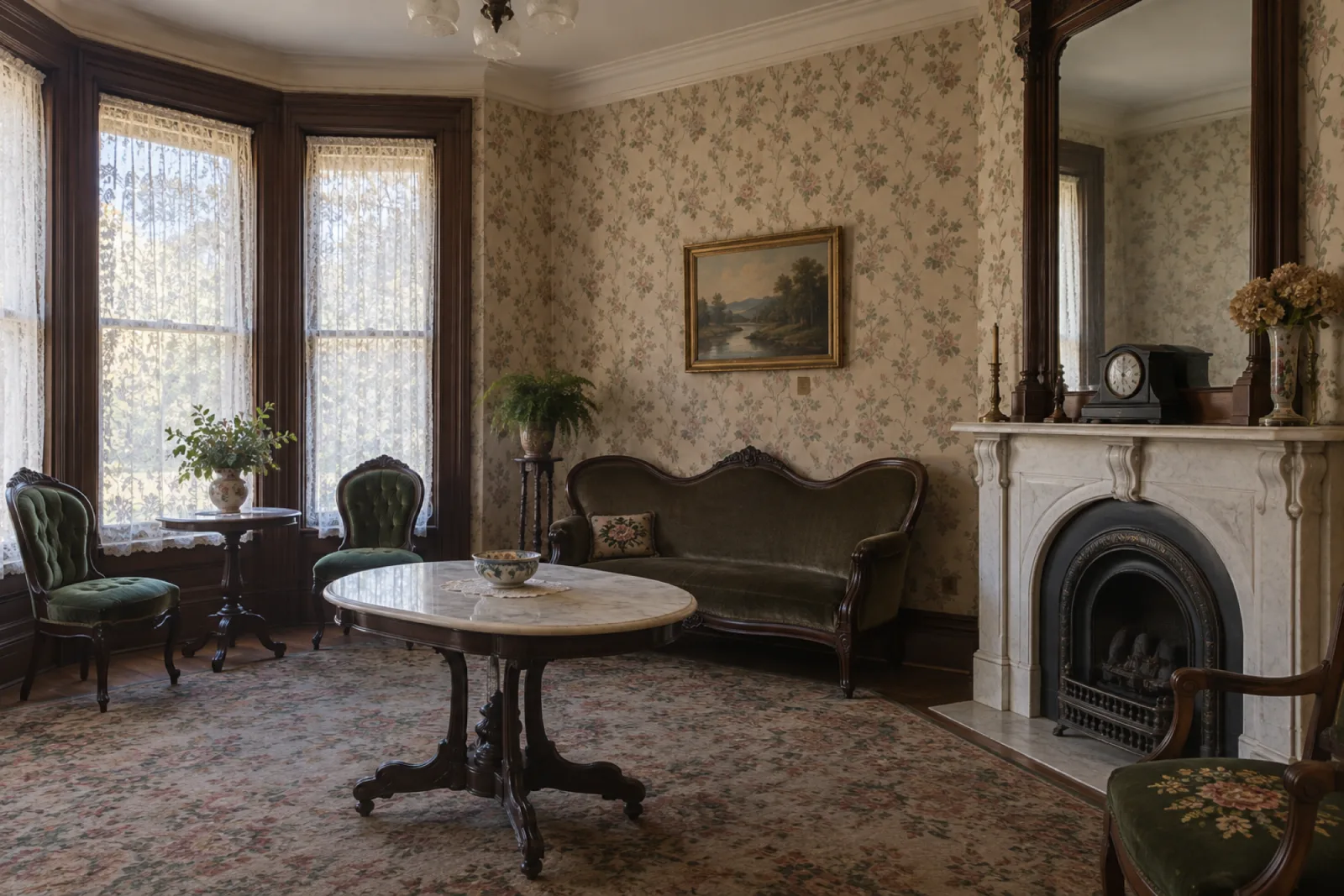
Five rooms kept as the Hollin family left them, a walled garden planted from their own seed books, and a collection you can read like a catalogue. Everything you need to plan a visit is below.
Open today until 5 pm
Last admission 4:15 pm. The garden keeps the house's hours.
Free for everyone on Sunday 4 October, the first Sunday of the month.
- Where
- 7 Water Street, Tarrow Landing, New York — the iron gate on Water Street, two minutes from the station on foot.
- Parking
- The town lot on Ferry Street, free after 10; two accessible spaces inside the gate, by arrangement at the desk.
- Step-free
- The ground floor, the garden and the garden room, by the ramp at the side door. The upper floor is reached only by the original stair; a photograph book of the rooms upstairs is at the desk.
- Admission
- Covers the house and the garden. Free for everyone on the first Sunday of the month.
| Adults | $14 |
|---|---|
| Seniors 65 and over | $10 |
| Students with ID | $8 |
| Children under 12 with an adult | Free |
| Members at every tier | Free |
Prices are for 2026 and include the garden. Tickets at the gate; no booking needed except for groups of ten or more. Hours by season, closures and accessibility in full →
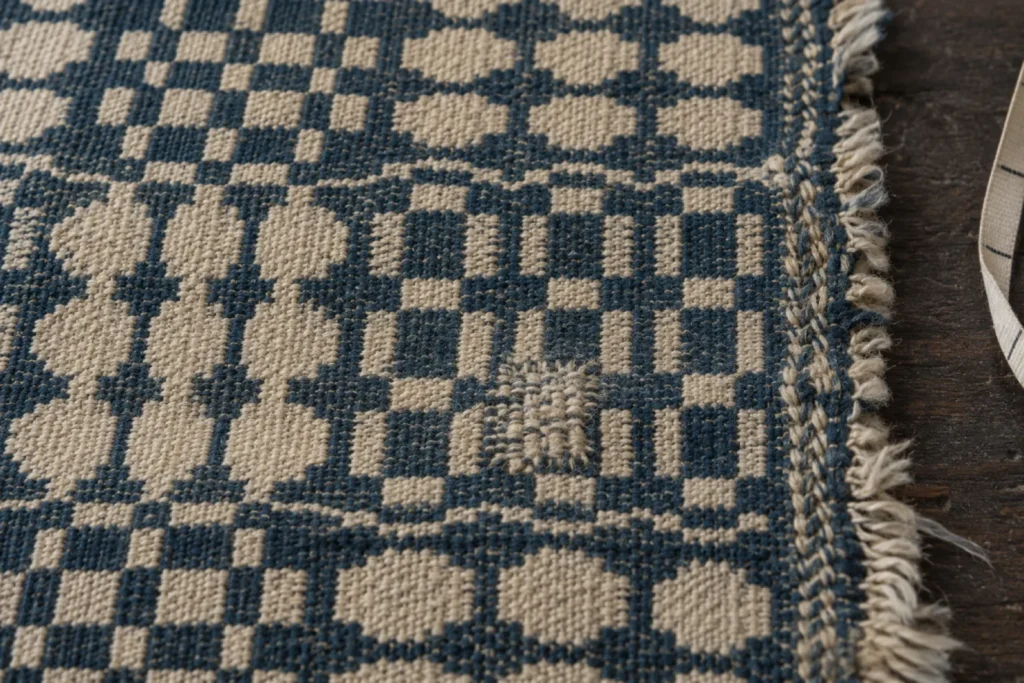
Kept in Cloth: coverlets and quilts from the Hollin attic
12 September 2026 to 10 January 2027 · 108 days left
Eleven coverlets and quilts that stayed in the house for a century, shown flat and in raking light so the weave and the repairs can be seen. Every piece has a label that says what it is made of, where it was mended, and what we do not know about who made it. A ground-floor set of the labels and a photograph book are at the desk for anyone who does not take the stair.
Coming up
The garden in September
The espaliered pears along the south wall are being picked, a few each morning, and the asters and dahlias in the long borders are at their best until the first frost. The kitchen beds are being cleared and sown with green manure, as the 1904 seed book has it. The urn at the end of the path is still planted; it comes in at the end of October.
Twelve objects, read like a catalogue.
Furniture, textiles, letters, garden tools and the family’s account books: about 4,180 objects, of which twelve are shown as plates with their date, material, room and accession number, and what it would cost to conserve each one. Adopting an object pays for that treatment; the object stays where it is.
A year of visits, from $55.
From $55 a year · 1,180 member households. Four tiers on one table, each row a benefit, so you can see exactly what changes between them. Members are free every day, not only the first Sunday.
What the money did, in public.
Admissions pay for about a third of a visit; the rest is members, gifts, rentals and a state grant. The three most recent Form 990s, the review and the exemption letter are on the Financials page, with every visitor count and how it was made.
Built for a house museum, not a brochure.
Hollin House is invented. The features are real and working, and each one is an example of what connectNPO builds for nonprofits. Youth arts → · Scholarships → · Community theatre → · Youth center → · Youth soccer → · Counseling → · Animal rescue → · Food pantry →
Open now, computed
“Open today until 5” or “closed Mondays, next open Wednesday” comes from the seasons and the closures sheet, never typed. The first Sunday says it is free.
Plan your visit →Tables set with care
Hours and admission with tabular numerals, right-aligned prices and a hairline under every row; every number carries its unit and its date.
Hours by season →Exhibitions that move themselves
Current, upcoming and past by date; a talk with no places left says so and offers the waiting list; past events vanish.
Exhibitions and events →The collection as plates
Figure, caption and a definition list per object, an accession number, and adopt-an-object with a stated cost and what it pays for.
The plates →Membership as a real table
One row per benefit, one column per tier, built from each tier’s list; the receipt rule for benefits over $75 stated with its source.
Membership →The staff side
One menu for seasons, closures, exhibitions, events, objects, tiers, admission, the garden note, numbers and documents. Signs you in as sample staff; nothing you change is saved.
Open the staff preview →